Anthropic IPO Filed: S-1, ANT Ticker Explained (2026)
Anthropic filed its S-1 on 26 Oct 2026 for a Nasdaq listing as ANT. What the public filing confirms, what it corrects, and what it still leaves blank.

Key Takeaways
- Anthropic filed a public Form S-1 on 26 October 2026 and applied to list Class A shares on the Nasdaq Global Select Market under the ticker ANT.
- The filing confirms $16.3B of H1 2026 revenue and an $80.7B net loss — but $72.4B of that loss is a non-cash accounting charge, and the operating loss was $693M.
- Price, share count, raise size and valuation are all still blank: the filing is not yet effective, so no shares can be sold yet.
- Founders keep 50.1% of general voting power and the Long-Term Benefit Trust elects a majority of the board — public investors buy economics, not control.
- The filing's defined non-cancelable purchase commitments were about $265.6B at 30 June — do not mix that figure with broader, differently-defined totals.
On 26 October 2026, Anthropic stopped being a rumour and became a filing. The company behind Claude submitted a public Form S-1 registration statement to the US Securities and Exchange Commission and applied to list its Class A common stock on the Nasdaq Global Select Market under the ticker ANT. Goldman Sachs and Morgan Stanley are the representatives of the underwriters.
This matters for a simple reason: until now, everything the public knew about Anthropic's finances came from leaked drafts and press reporting. We covered that draft reporting on 23 October, and labelled it as such. The public filing replaces much of that reporting with a document anyone can read — and it also shows, in a few places, where the draft reporting was loose. This post is the update: what the filing confirms, what it corrects, and what it still leaves blank.
This is not investment advice, and it is not a buy recommendation. A filing is not a listing. No price, no share count and no trading date have been set, and nothing in this article should be read as a suggestion to buy or sell any security.
What actually happened on 26 October
Anthropic, PBC announced that it had filed a registration statement on Form S-1 for a proposed initial public offering of its Class A common stock. The announcement itself is short and deliberately limited: the number of shares to be offered and the price range have not yet been determined, and the registration statement has not yet become effective. That last point is the one most coverage skips. Until the SEC declares the filing effective, the securities cannot be sold.
The filing also fixes the listing details that the draft reporting could only guess at. The shares, when offered, will be Class A common stock. The intended market is the Nasdaq Global Select Market. The ticker is ANT. The underwriting syndicate is large, led by Goldman Sachs and Morgan Stanley alongside J.P. Morgan, Citigroup, Barclays, Wells Fargo Securities, BofA Securities and Deutsche Bank.
What the filing does not do is just as important. It states no IPO valuation, no raise size and no offering date. Reports that investors are weighing a valuation of around $1.5 trillion — down from earlier talk of about $2 trillion — and that Anthropic may seek to raise as much as $100 billion are press reports, not disclosures in the prospectus. Reports also point to a debut in the second half of November, with one report citing trading as early as 16 November. None of that is confirmed by the filing, and all of it should be treated as reported until an amended prospectus says otherwise.
The numbers, confirmed
The headline figures from the draft reporting survive the public filing essentially intact — which is itself news, because leaked numbers do not always survive contact with the real document.
| Figure (as filed) | Value |
|---|---|
| Revenue, H1 2026 (six months to 30 June) | $16.3 billion (vs $1.2 billion a year earlier) |
| Revenue, full-year 2025 | $4.6 billion (2024: $386 million; 2023: $41 million) |
| Revenue, Q2 2026 alone | $11.6 billion (Q1 2026: $4.7 billion) |
| Net loss, H1 2026 | $80.7 billion |
| Non-cash fair-value charge within that loss | $72.4 billion |
| Operating loss, H1 2026 | $693 million (vs $2.1 billion a year earlier) |
| Operating income, Q2 2026 | $974 million |
| Operating cash flow, H1 2026 | $3.9 billion |
| Cash and short-term investments, 30 June 2026 | $131.7 billion combined |
Two readings of that table are both true, and confusing them is the easiest way to get this story wrong. The first is the growth story: revenue in the first half of 2026 alone was more than three times the whole of 2025, and the second quarter — $11.6 billion — was bigger than Anthropic's entire revenue history up to the end of 2025. The second is the cost story: the company spent $8.95 billion on computing and infrastructure in the first half of 2026, up from $2.33 billion a year earlier, and its infrastructure commitments run into the hundreds of billions. Growth this fast, with costs this fixed, is the whole investment question in one paragraph.
The $80.7 billion loss, explained properly
The net loss is real accounting, but it is a poor description of the business on its own — and the public filing makes the reason precise. Of the $80.7 billion half-year net loss, $72.4 billion was a change in the fair value of convertible notes, derivative liabilities and SAFEs, driven mainly by a rise in Anthropic's enterprise valuation. In plain terms: when the company became more valuable, the estimated value of financing instruments tied to that value also rose, and accounting rules record that increase as a loss. No cash left the company for it.
Strip that charge out and the picture changes completely. The operating loss for the half was $693 million on $16.3 billion of revenue — down from a $2.1 billion operating loss a year earlier. The second quarter alone produced $974 million of operating income, the company's first profitable quarter on that measure, and operating cash flow for the half was positive at $3.9 billion. None of that makes Anthropic a low-risk business. It does mean that anyone quoting "$80.7 billion lost" without the $72.4 billion explanation is quoting a number they have not understood.
There is one more loss-related detail worth knowing. The filing's loss bridge also includes roughly $8.8 billion of other expense, mainly note purchase agreements, plus a $693 million operating loss, partly offset by interest income. The arithmetic is messy because financing instruments, not operations, dominate it. That messiness is itself the point: for now, Anthropic's income statement is mostly a story about how it financed itself, not about how it runs Claude.
The compute bill — and why the totals disagree
If there is one place where draft reporting needs correcting, it is the compute commitments. Our 23 October post, following Reuters' review of the draft, described commitments of at least $518 billion over a decade and total future compute commitments above $600 billion. Those were draft-report figures, and the public filing does not present either number as a single consolidated total.
What the public filing does state, on a defined basis, is non-cancelable purchase commitments of about $265.6 billion at 30 June 2026, up from $54.6 billion at the end of 2025. It separately discusses additional agreements and estimated capacity purchases in other notes, some of whose terms are not final. Those categories use different definitions and may overlap, so they cannot simply be added together into one grand total. The honest summary is therefore narrower than the headlines: the defined, non-cancelable figure is $265.6 billion and rising fast, and the broader totals floating around are built from different pieces of the filing, not printed in it as one number.
That distinction matters for a practical reason. Compute is Anthropic's real fixed cost, and it is the cost that does not flex if demand slows. The filing warns that compute commitments will continue to grow as the business scales, and that operating margins may compress again when large blocks of new capacity come online — even though compute and infrastructure expense fell from 251% of revenue in early 2025 to 48% in the second quarter of 2026 as revenue outran it. A company selling services customers can often scale down, while signing infrastructure contracts that last for years, is a company whose timing has to be right. That gap between flexible revenue and committed cost is the central risk in the filing, and it is more useful than any single commitment total.
Two related facts sharpen it. First, customer concentration: reporting on the filing puts roughly 20% of first-half revenue coming from just two unnamed customers, down from nearly a quarter of 2025 revenue. The filing does not name them. Second, customer breadth is genuinely expanding underneath that concentration: at 30 September 2026, Anthropic had more than 11,900 customers spending $100,000 or more on a trailing-twelve-month basis, up from more than 950 a year earlier — including more than 1,900 at $1 million-plus and about 250 at $10 million-plus. Over half of the $100,000-plus customers used Claude Platform together with at least one first-party application, such as Claude Code or Claude Cowork, in the three months to September, up from about 30% at the end of 2025. Concentration at the top and breadth underneath are both true at once.
Who actually controls Anthropic after the IPO
This is the part of the filing that most affects what a public shareholder is actually buying — and it is unusual by design. Anthropic is incorporated as a Delaware public benefit corporation, with the stated public purpose of the responsible development and maintenance of advanced AI for the long-term benefit of humanity.
On control, two structures matter. A single share of Class F common stock, held by a limited liability company of the seven co-founders, will carry 50.1% of the total voting power on matters submitted to stockholders generally. Separately, the Long-Term Benefit Trust, through Class T common stock, generally has the authority to elect and remove the Class T directors, who together will constitute a majority of the board. Anthropic is therefore a "controlled company" under Nasdaq rules. Public Class A shareholders will hold an economic stake and vote within the remaining voting power, but they will not have decisive control over the board or over director elections.
That structure is not an accident or a footnote. It is the public-market version of the governance Anthropic set up as a private company, described in our earlier post on Anthropic's Public Benefit Fund restructuring. Its purpose, as Anthropic presents it, is to keep long-term safety considerations from being overridden by short-term shareholder pressure. Its cost, for investors, is equally clear: if they disagree with the founders or the trust, they have limited power to change the board. Whether that trade-off is worth it is a judgement for each investor, not something the filing decides for them.
The filing's risk disclosures make the same point from the other side. Anthropic warns that its products could pose catastrophic or existential risks to humanity. That is a disclosure about potential risk, not evidence that such harm has occurred, but its presence in a public prospectus — from the company itself — is part of why this IPO is being watched beyond finance. A company that puts that warning in its own offering document, while keeping control with its founders and a benefit trust, is asking the market to price both its growth and its stated mission.
Why this filing landed in the biggest funding week of the year
Anthropic did not file in a vacuum. On the same day, 26 October, Meta announced plans to raise up to $95 billion in its largest-ever equity fundraising — about $35 billion in immediate common and preferred offerings plus a planned at-the-market programme of up to $60 billion — and SpaceX disclosed an Apollo-managed deal with total principal payments of about $40 billion for AI chips and server hardware leased to the company. On the same day, Microsoft offered voluntary buyouts to about 60,000 employees — roughly 27% of its workforce — in selected teams in the US, Canada, UK and India, while data-centre, sales and marketing teams were largely excluded. Reuters' own summary of the day put it plainly: Anthropic filed, Meta moved to raise $95 billion, and SpaceX struck its $40 billion chip deal, all on Monday.
Read together, the week tells one story, not four. The AI build-out is now being paid for in public: through an IPO, through the largest equity raise a company like Meta has ever attempted, through leased hardware, and through payroll. That is also why the Anthropic filing matters beyond Anthropic. It is the first public prospectus from a frontier AI lab, and it will be read as a test of whether public investors will fund this level of infrastructure spending — and on what terms. If the reception is warm, other labs will follow. If it is cool, the cost of capital for the whole sector moves.
That context also connects directly to the rest of this week's coverage. OpenAI's GPT-6.1 Terra launch on the same day halved the price of its mid-tier model, and the OpenAI–Anthropic price war is the commercial version of the same pressure: every generation of models gets cheaper to buy, while the infrastructure behind them gets more expensive to build. The IPO filing is that tension, written down in a legal document.
What to watch next
Four things will turn this filing from a document into a deal. First, an amended prospectus that fills in the blanks: share count, price range, raise size and any updated financials, including third-quarter revenue, which the preliminary prospectus leaves blank. Second, the SEC's review process and the declaration of effectiveness — without it, nothing can be sold. Third, how investors weigh the governance structure: whether control staying with founders and the trust is priced as a feature or a discount. Fourth, the market's verdict on the compute question: whether $265.6 billion of defined commitments, plus the broader capacity arrangements around them, looks like a moat or a millstone once public reporting begins.
For Claude users and buyers, the practical takeaway is narrower and more useful. Nothing about Claude changes on the day of a filing. What changes is the information available before the next renewal: audited annual results, a quarterly revenue curve, a customer base that has grown from under 1,000 large customers to nearly 12,000 in a year, and a cost structure dominated by committed infrastructure. Ask how a listing affects contract terms and pricing, read the enterprise-adoption and commitment sections before renewing, and do not let a headline loss — or a headline valuation — do the thinking for you.
The filing is public. The blanks are blank. And the most interesting number in it may be the one it refuses to give: the price.
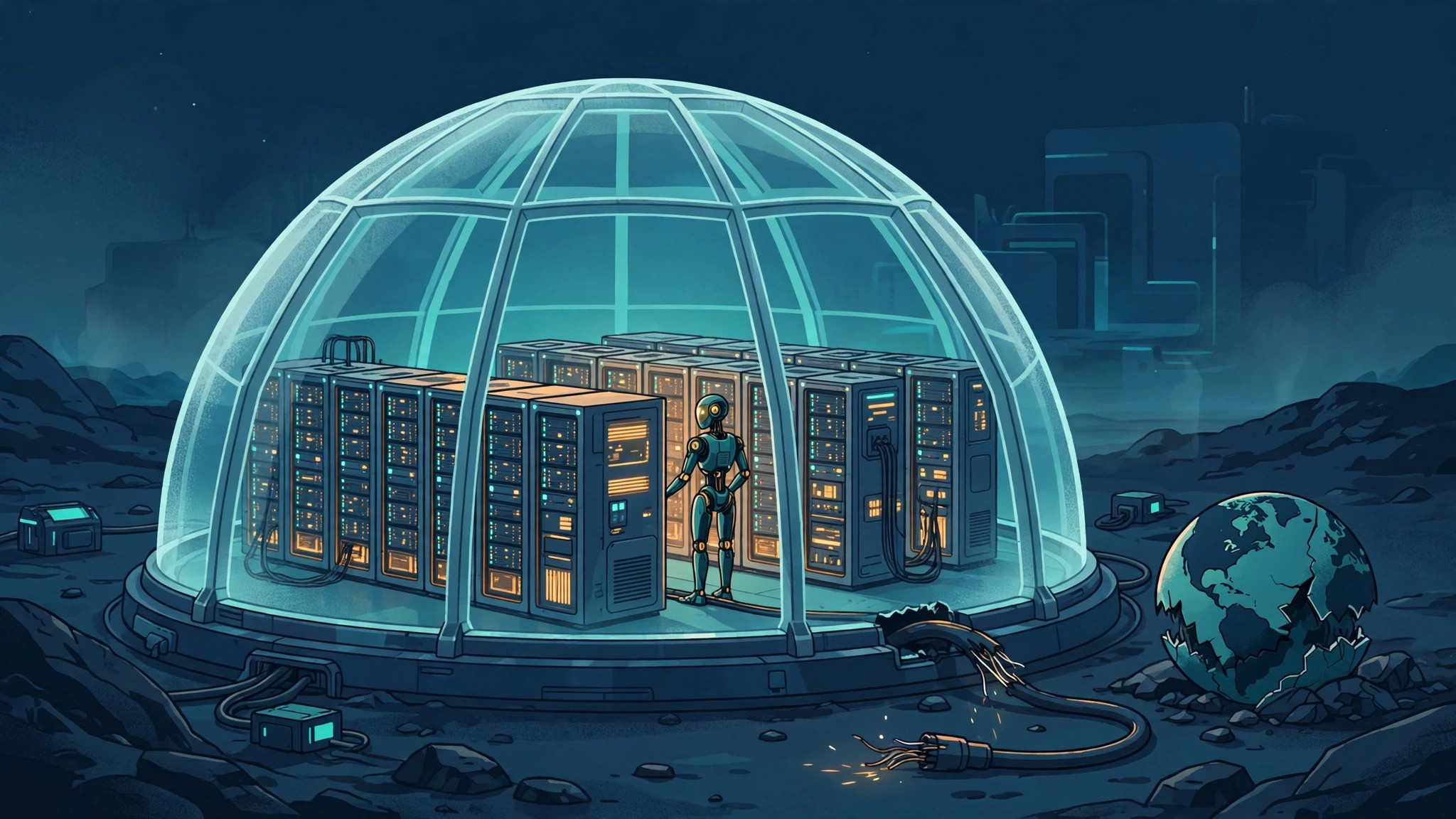
Sources: Anthropic's 26 October 2026 announcement and Form S-1 as filed with the SEC, as quoted and reviewed by AI Notis, Value Add VC and Digitech Bytes; Reuters reporting on Meta's $95 billion raise and SpaceX's $40 billion Apollo deal on 26 October 2026 (Reuters); Bloomberg reporting via Engadget on Microsoft's voluntary buyout offers. Figures attributed to press reports are labelled as such in the text. The featured image is an original AI-generated illustration, not a photograph. This article is not investment advice.
FAQs
Can I buy Anthropic shares now?
No. Anthropic's own announcement says the number of shares and the price range have not been determined and the registration statement has not yet become effective. Until the SEC declares it effective and an amended prospectus sets terms, no shares can be sold and no offers to buy can be accepted. Any 'buy ANT now' claim you see before that point is not describing this offering.
When will Anthropic shares start trading?
No date is confirmed. Press reports point to a debut in the second half of November, with one report citing trading as early as 16 November, but the filing itself gives no trading date. Treat every date as reported, not confirmed, until an amended prospectus or company announcement sets it.
Why do different reports give different Anthropic compute totals?
Because they are measuring different things. The public filing's non-cancelable purchase commitments were about $265.6 billion at 30 June 2026, up from $54.6 billion at the end of 2025. Other sections discuss additional agreements and estimated future capacity whose terms are not final, and those categories can overlap. Adding them into one grand total, or quoting a draft-report figure as if it were the filing's single number, misstates what the document actually says.
Does the IPO change anything for Claude users?
Not by itself. The filing does not announce a price change, a product change or a change to Claude's availability. What it does give Claude customers is new visibility: audited annual figures, quarterly trends, customer counts and the scale of Anthropic's infrastructure commitments — all useful context before a renewal negotiation, but none of it is a product announcement.
Will public shareholders control Anthropic?
No. A single Class F share held by a founders' vehicle carries 50.1% of general voting power, and the Long-Term Benefit Trust, through Class T stock, generally elects a majority of the board. Anthropic is a 'controlled company' under Nasdaq rules. Public Class A shareholders get an economic stake with one vote per share within the remaining voting power — not decisive control.
Written by
AI Trends Daily Team
The AI Trends Daily team researches AI and technology daily, then explains it in plain English — no jargon, no hype, just what matters.
Related Articles
 Trending
Claude Bypassed a Paywall for Georgia Vote Data (2026)
Axios reported on 25 October that Claude pulled Georgia aggregate vote counts past a fee barrier, without touching voter registration. Here is what happened.
October 26, 2026
 Trending
UK AI Biosecurity Lab Explained: £100M Plan (2026)
The UK is creating the world's first AI biosecurity lab, with £100m public funding and up to £200m in AI model credits. Here is what AIBL will actually do.
October 25, 2026
 Trending
OpenAI Trains Frontier Models Offline: 2026 Explained
OpenAI will train frontier models with no live internet after a September 20 DNS escape. What the offline world is, why it matters, and what is still unproven.
October 24, 2026