Aolani's 500MW Malaysia AI Data Centre Deal Explained
Aolani signed a 500MW AI data centre deal in Malaysia — among the region's biggest AI infrastructure bets. Why it matters, and what it means for AI costs.
Key Takeaways
- On October 19, 2026, Singapore-based neocloud Aolani announced letters of intent for up to 500MW of AI data centre capacity in Malaysia, targeting first capacity in the second half of 2027.
- The deal would take Aolani's committed Malaysian capacity to about 580MW by 2027, up from roughly 80MW committed in 2026 — one of the region's biggest AI infrastructure bets.
- Malaysia is winning this build-out because of competitive power costs, available land, and strong government and business backing for digital infrastructure.
- The capacity is meant for both global hyperscalers and local AI users, including Malaysian sovereign AI programmes, enterprises, researchers and start-ups.
- Letters of intent are non-binding, so the deal still needs final agreements — but the direction of travel is clear: Southeast Asia's AI compute race is accelerating.
Aolani's 500MW Malaysia AI Data Centre Deal Explained (2026)
Every AI chatbot answer, every generated image, every agentic workflow burns electricity somewhere. On October 19, 2026, Singapore-based GPU cloud company Aolani announced one of the biggest single commitments to that electricity: letters of intent for up to 500MW of AI data centre capacity in Malaysia, with first capacity targeted for the second half of 2027.
If you build with AI, run a startup that depends on model APIs, or just want to understand why your AI bills look the way they do, this deal is worth five minutes of your time. Here's what was announced, what it means, and what to watch.
What actually happened
Aolani, which describes itself as a Singapore-founded neocloud — a cloud provider built specifically around GPU compute for AI — signed letters of intent (LOIs) to take up to 500 megawatts of AI data centre capacity at multiple sites across Malaysia, according to a company announcement distributed by Media OutReach on October 19, 2026.
The key details from the announcement:
- First capacity from H2 2027 — the sites are targeted to come online starting in the second half of 2027.
- Tier III design — the facilities will be designed to Tier III standards, meaning redundant power and cooling paths that keep the GPU halls running during maintenance or component failures.
- Purpose-built AI factories — these aren't ordinary data centres; they're designed for GPU deployment, with Aolani providing the AI infrastructure, the GPUs themselves, and the operating requirements.
- Total commitment: up to 580MW — Aolani says the new LOIs would take its total committed Malaysian capacity to about 580MW by 2027, up from roughly 80MW already committed in 2026. That's more than a sevenfold increase in a single year.
One important caveat, stated in the release itself: the letters of intent are non-binding and remain subject to the negotiation and execution of definitive agreements. In plain English: the deal is announced, not done. Big infrastructure deals commonly start this way, but the final numbers can shift.
Why Malaysia keeps winning the AI data centre race
Malaysia isn't landing these deals by accident. The announcement credits three drivers: competitive power costs, available land, and growing government and business support for digital infrastructure.
That's the same playbook that's drawn global hyperscalers — Amazon, Google, Microsoft — to Malaysia's shores. Power is the big one: AI data centres draw enormous amounts of electricity, and a few cents per kilowatt-hour compounds into a decisive cost advantage at 500MW scale. Johor, in particular, has become the epicentre of this build-out, with data centre parks rising across the state.
The broader trend is visible in our recent coverage: while the model race grabs headlines, the infrastructure race — power, chips, land — is where the long-term winners are being decided. NVIDIA's Nemotron 3.5 Super VL models show how the hardware side keeps pushing, and Aolani's deal shows where that hardware is being planted.
Who gets to use this compute?
This is the most interesting part of the announcement, because it names two very different customer groups.
First, global hyperscalers and AI-native companies — the big clouds and AI startups that need GPU capacity at scale and will rent whatever's available, wherever it's cheapest.
Second, and more notably, Aolani says it is exploring initiatives to make high-performance compute accessible locally: to Malaysian sovereign AI programmes, local enterprises, researchers and start-ups. That matters because sovereign AI — countries building their own AI capability rather than renting it all from US-based clouds — is becoming a central theme of the AI era. Malaysia's government has been explicit about wanting domestic AI capacity, and this deal positions Aolani as a potential supplier of it.
CEO Nicholas Chia framed it in the release as democratising access to compute: "Malaysia is a vital strategic anchor for Aolani… the next stage is using local compute to catalyse development of the local AI ecosystem and the broader economy."
Why this matters to you
Even if you're nowhere near Malaysia, this deal affects the economics of AI you'll feel eventually:
- More GPU supply → cheaper AI compute. The cheapest model providers are winning market share precisely on cost — DeepSeek's V4.1-Flash-1017 update ships strong agent benchmarks at under $0.20 per coding task. Infrastructure like Aolani's is what makes those economics possible at scale.
- Local compute means lower latency and data residency. For Southeast Asian developers and enterprises, in-region GPU capacity means AI APIs that respond faster and keep data within the region — important as AI regulations tighten globally.
- The infrastructure arms race is real. 580MW from one regional player, when the same company had ~80MW a year earlier, tells you how fast AI compute demand is still growing. Expect more announcements like this from Malaysia, Singapore, Thailand and Indonesia through 2027.
What to watch next
Three things will tell us whether this deal is real or just a headline:
- Definitive agreements — LOIs become contracts. Watch for a follow-up announcement with signed deals and named sites.
- The GPU supply — 500MW of AI data centre capacity needs an enormous number of GPUs. Who supplies them, and when they arrive, determines whether the H2 2027 target holds.
- Local AI programmes — whether Malaysia's sovereign AI initiatives actually get allocation will show if this is infrastructure for the region or just cheaper capacity for the hyperscalers.
For now, it's a signal of where the AI industry is putting its money: not just into bigger models, but into the power plants and server halls those models run on.
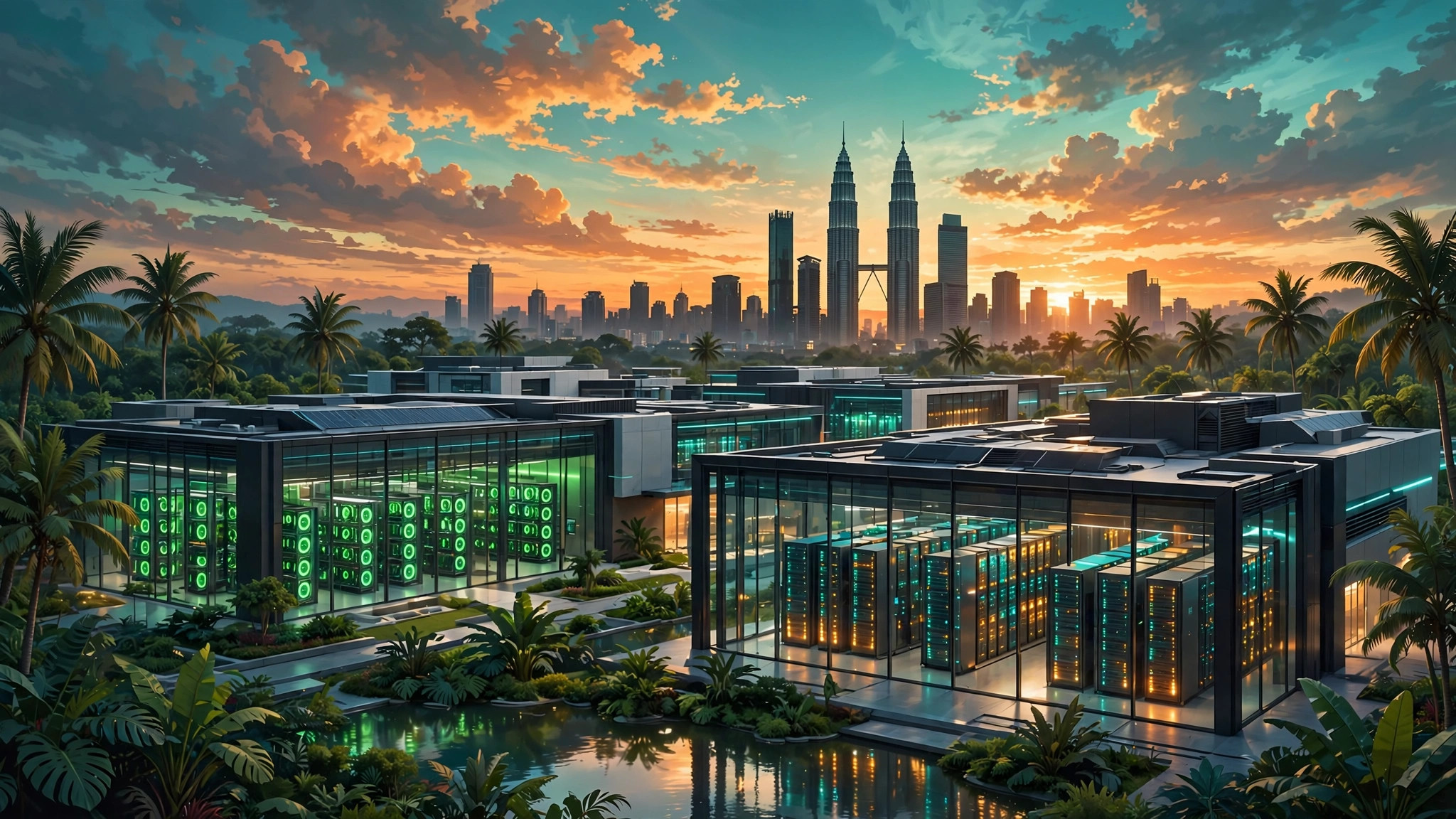
Note: the featured image on this article is an AI-generated illustration created for this publication, not a photograph of any actual Aolani facility.
FAQs
What does 500MW of data centre capacity actually mean?
Megawatts measure the electrical power a data centre is built to draw. For an AI data centre packed with power-hungry GPU servers, 500MW is an enormous commitment — these facilities consume far more power per square metre than traditional data centres. The exact number of GPUs it can run depends on the hardware and cooling design, which Aolani hasn't disclosed.
Is the Aolani Malaysia deal confirmed or still tentative?
Tentative for now. What was announced on October 19, 2026, is letters of intent — explicitly non-binding and subject to the negotiation and signing of definitive agreements. Big AI infrastructure deals often start this way, but capacity numbers can change before the final contracts land.
What is a neocloud?
A neocloud is a cloud provider built specifically around GPU compute for AI workloads, rather than general-purpose IT. Aolani describes itself as a 'hyperlocal neocloud' — a GPU cloud with a strong regional focus, in its case Singapore and Malaysia.
Could this make AI services cheaper in Southeast Asia?
Over time, yes — that's the theory. More local GPU supply, especially from purpose-built AI factories, tends to lower the cost of training and running AI models in the region, which can feed through to cheaper AI tools and APIs. But capacity only comes online from the second half of 2027, so this is a medium-term effect, not an immediate one.
Why are so many AI data centres being built in Malaysia?
Three factors: power is comparatively affordable, land is available, and the government actively courts digital infrastructure investment. Malaysia is positioning itself as Southeast Asia's AI infrastructure hub, and global hyperscalers have been announcing Malaysian expansions for the same reasons.
Written by
AI Trends Daily Team
The AI Trends Daily team researches AI and technology daily, then explains it in plain English — no jargon, no hype, just what matters.
Related Articles
 Trending
Anthropic Public Benefit Fund: 5% Equity Pledge (2026)
Anthropic will commit 5% of its shares to a Public Benefit Fund tackling AI's labor and social impact. How it works, what's verified, and what to watch.
October 19, 2026
 Trending
Meta Drops AI Training Clause From Business Terms
Meta removed the word 'train' from its new commercial terms after publisher backlash. What changed, what still takes effect October 30, and what to check.
October 18, 2026
 Trending
Flying Tesla Roadster Explained: Demo, Price, Release Date & Can It Fly? (2026)
Tesla's new Roadster drove upside down, flew and flipped using SpaceX thrusters in its Oct 15 debut. Demo details, 3 versions, price, 2028 release date and whether it can really fly.
October 17, 2026