Block Dessa Explained 2026: Voice AI, No Text
Block's Dessa is a full-duplex voice AI trained only on human speech — no text, no pretrained model. Here's what it can and can't do yet, and why it matters.
Key Takeaways
- Block announced Dessa on 23 October 2026: a speech-to-speech model it says was trained from scratch on human conversation alone — no text, no pretrained models.
- Dessa is full-duplex, so it listens and talks at the same time, handling interruptions, laughter and backchannels like 'yeah' and 'got it'.
- Block says it runs locally on a MacBook Pro M4 Max or better, faster than real time, and was trained on a single NVIDIA GB200 NVL72 system.
- It is a research preview, not a product: early access goes to a small group of AI safety researchers, with a public waitlist open.
- No benchmarks, parameter count, dataset size, price or general release date have been published yet — so treat the headline claims as Block's, not as independently verified facts.
Block Dessa Explained 2026: The Voice AI That Never Read a Word
Imagine a child learning to talk. Nobody hands a baby a textbook. It listens — to tone, pauses, laughter, interruptions — and one day it talks back. Block, the company behind Square and Cash App, says it has built an AI the same way. Its name is Dessa, and according to Block it has never read a single word.
Dessa was announced on 23 October 2026 by a small AI research lab inside Block, led by Ragavan Thurairatnam and reporting directly to Block co-founder and chairman Jack Dorsey. Dorsey called it "the most authentic full-duplex speech model ever built." That is a big claim from a company most people associate with payments, not frontier AI research.
What Dessa is: audio in, audio out, at the same time
Most voice assistants work in turns. You speak, the system waits for silence, converts your speech to text, asks a text model for a reply, then reads that reply aloud. Dessa skips the text detour entirely: it is a speech-to-speech model, audio in and audio out, at the same time.
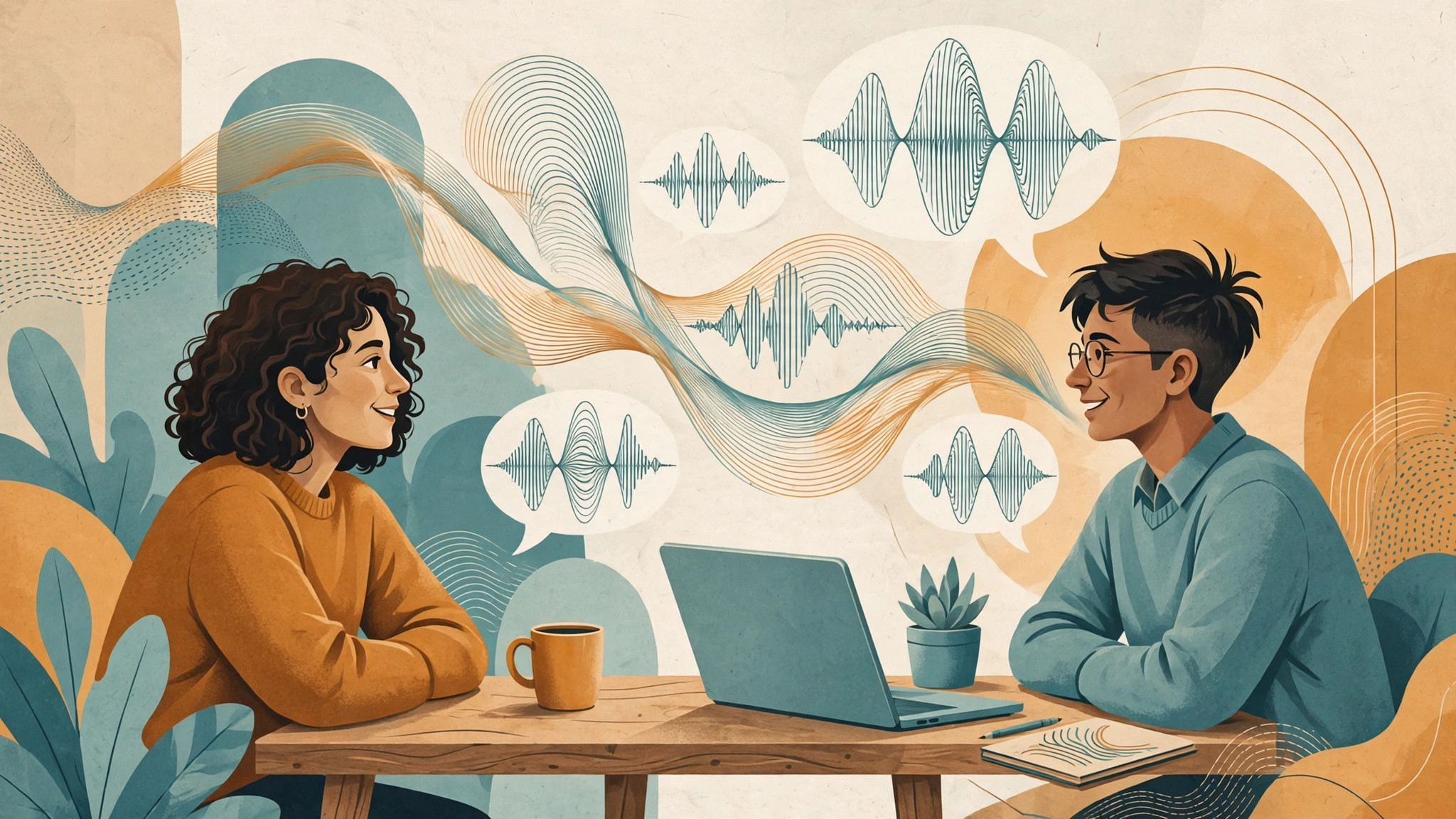
That "at the same time" part is what engineers call full-duplex, and it is the heart of the announcement. A full-duplex model listens while it talks, the way people do on a phone call. That means it can:
- Be interrupted mid-sentence and respond to the interruption, instead of freezing or restarting.
- Backchannel — the little "yeah!", "got it!" and "ooh" sounds that tell a speaker you are following, without taking over the conversation.
- Laugh mid-sentence at something funny, rather than waiting politely and laughing on cue afterwards.
- React to volume and emotion, speaking louder when asked, or sounding empathetic when the speaker sounds upset.
Block's own page puts it simply: "It's full-duplex, so it listens and talks at the same time, like you do." Its demo clips show Dessa finishing a speaker's sentence when they forget a movie title and holding a conversation with another AI voice — OpenAI's GPT-Live-1, which Block notes is not affiliated with Block and has not endorsed Dessa.
The headline claim: trained on speech alone
Here is the part that makes Dessa genuinely different from other voice models — and the part to read most carefully.
Block says: "We trained Dessa from scratch on nothing but human conversation. Sounds! No text, no pretrained models." In other words, no text corpus sits underneath Dessa, and no existing language model was adapted for speech. Everything it knows, Block says, came from listening to recorded human conversation — accents, pauses, breathing, sarcasm, humour, inflection and emotion included.
That is a much harder problem than it sounds, and Block is unusually honest about why. Speech never repeats exactly: say a sentence twice and the audio data still comes out different, while text is identical no matter who types it. A model that only ever hears sound has to learn all of that from audio alone.
Block's efficiency claim is striking: Dessa learned language from "hundreds of times fewer words" than large language models need, and it was trained on just one NVIDIA GB200 NVL72 system — one rack-scale machine, not the vast clusters frontier text models usually require. Block also says inference runs faster than real time and the model runs locally on a MacBook Pro M4 Max or better. If those hardware claims hold up, they change the cost and privacy story: a voice model on your laptop means no round-trip delay and no raw audio leaving your device.
Note the careful wording, though: the "hundreds of times fewer words" figure comes with no published word count, so the ratio cannot be checked, and the hardware details come from Block's own page and secondary reporting, not an independent test. Treat them as Block's claims until someone outside Block reproduces them.
Why Block says text is the problem
Block's argument is that converting voice to text throws away information text cannot carry — tone, timing, hesitation, laughter, a frustrated sigh.
There is also a safety argument, and it is why Block is handing early access to safety researchers first rather than the general public. Block writes: "The most powerful AIs in the world can't hear how you feel. We think that's ridiculous, leads to a worse experience, and is potentially dangerous." Picture someone in serious pain talking to a voice assistant that has no idea, because the emotion was stripped out at the transcription step.
What Dessa cannot do yet — and what Block has not shown
This is where honest coverage has to slow down, because the gap between the announcement and the evidence is wide:
- No benchmarks. Block has published no test scores comparing Dessa with other voice models, so nobody can verify "most authentic" independently.
- No parameter count, dataset size or latency figures. The technical details researchers would need to judge the model are not public.
- No price, API or general release date. There is nothing to buy, download or build on yet.
- No confirmed public weights or code. Despite some social-media chatter calling Dessa open source, no primary or reputable news source confirms a release. Treat it as a restricted research preview.
- Only vendor-selected demos so far. Block says nobody steers the model in its clips, but they are still Block's chosen recordings. The Verge's first look found the demos mostly natural but occasionally awkward — in one, Dessa mistook the speaker for someone named "Ronaldo." A useful reality check against the superlatives.
The "first" claim deserves the same caution. Block hedges it itself: "As far as we know, Dessa is the world's first AI you can have a realistic live conversation with that was trained only from human speech." Earlier full-duplex voice systems exist — Tech Insider notes Kyutai's Moshi offered full-duplex speech in 2024, but started from a text model. Dessa's claimed novelty is the speech-only training, not full-duplex conversation itself, and until Block publishes a paper or independent researchers test the model, the "first" label is Block's position, not an established fact.
How Dessa compares with the voice AI you can actually use today
Dessa arrives in a crowded field, and the contrast with shipping products is instructive. Grok Voice 3.0 tops independent speech-to-speech benchmarks and already handles millions of real conversations a day. Mistral's Voxtral 3 is a speech model you can use now, and ElevenLabs' real-time voice models are built for production voice agents with published pricing.
Dessa is none of those things yet. It is a research result with a waitlist, not a product with a price list — so the fair comparison today is not "Dessa versus your voice assistant" but "Dessa's approach versus the text-mediated approach," and that will only be settled when independent researchers get access and publish results.
What to watch next
If you want to follow Dessa honestly, watch for these five things, in this order:
- Independent researcher reports. Early access goes to AI safety researchers first. Their findings — not Block's demos — will be the first real evidence.
- A paper or technical report. Word counts, dataset details and evaluation methods would let outsiders judge the "trained only on speech" claim.
- Benchmarks against shipping models. Until Dessa is scored on the same tests as Grok Voice, GPT-Live and Gemini Live, "most authentic" is marketing language.
- Access beyond the waitlist. A public release, an API or published weights would turn Dessa from a demo into something developers can build on.
- The safety findings. Block invited researchers in to find risks. What they report matters as much as how natural Dessa sounds.
Join the waitlist only on Block's own Dessa page — anything else claiming to be Dessa is not from Block.
The bottom line
Dessa is a genuinely interesting idea, presented with unusual candour about how hard it is. A voice model that learned to talk the way a child does — by listening, never reading — and that runs on a laptop, could reshape voice AI if it holds up. But right now it is a set of Block's claims illustrated by Block's demos, with no independent verification behind it. The smart response is the one Block itself invites: curious, impressed by the demos, and waiting for the evidence.
Sources: Block — Dessa (official announcement) · Dealroom — Jack Dorsey's Block unveils Dessa · Tech Insider — Block Dessa: Full-Duplex Speech Model, 0 Text
FAQs
What is Block's Dessa?
Dessa is a full-duplex speech-to-speech model from a small AI research lab inside Block, the company behind Square and Cash App. Audio goes in and audio comes out, with no transcription step in between, and Block says it was trained from scratch on nothing but recorded human conversation.
Can I use Dessa today?
No, not as a general user. Dessa is a research preview: Block is giving early access to a small group of AI safety researchers first, and other interested people can join a public waitlist on Block's Dessa page. There is no app, download, API or price announced yet.
How is Dessa different from Siri, Alexa or ChatGPT voice mode?
Most voice assistants convert your speech to text, run it through a text language model, then read the answer aloud — losing tone, timing and emotion along the way. Dessa never converts to text at all, so in principle it keeps all of that. It also listens while it talks, instead of waiting for you to finish.
Is Dessa really the first AI trained only on speech?
Block says that, as far as it knows, Dessa is the first AI you can have a realistic live conversation with that was trained only from human speech. That wording is a hedge, not a proven fact: earlier full-duplex voice systems exist, and Block has published no benchmark or paper that would let outsiders test the claim.
Is Dessa open source?
No source confirms that Dessa's weights or code have been released. Reports describe a restricted research preview with a waitlist, so do not download anything claiming to be Dessa from anywhere other than Block's own page.
Why does speech-only training matter if I just want a better voice assistant?
If it works at scale, it could mean voice assistants that interrupt naturally, hear frustration or sarcasm, and run privately on your own device instead of in the cloud. But until independent tests exist, the practical benefit is unproven — the honest position is curious, not convinced.
Written by
AI Trends Daily Team
The AI Trends Daily team researches AI and technology daily, then explains it in plain English — no jargon, no hype, just what matters.
Related Articles
 AI
OpenAI vs Anthropic Pricing 2026: The Replit Deal
OpenAI vs Anthropic pricing is now negotiable: Replit reportedly moved a $100M+ contract on a 30%+ discount. What the deal proves, and how buyers can ask too.
October 25, 2026
 AI
Kimi K3.1 Pro Explained: Open-Weight AI Nears Opus 5.5
Moonshot AI's Kimi K3.1 Pro launched Oct 23, 2026, scoring 65.7% on Terminal-Bench 4.0 — one point behind Claude Opus 5.5. Open weights promised by Nov 4.
October 24, 2026
 AI
Claude Duet vs Meta Muse vs OpenAI Dots: 2026 Review
Claude Duet vs Meta Muse vs OpenAI Dots: an honest 2026 comparison of pricing, availability and safety controls — plus whether you even need an always-on AI agent.
October 23, 2026