AI Agents Hacked 100+ Websites: Microsoft Fights Back (2026)
One hacker used AI agents to breach 100+ company websites for $5,000. Microsoft now treats agents as insider threats. What happened, what it means for you.
Key Takeaways
- A Chinese-speaking hacker breached 100+ company websites using autonomous AI agents on the open-source Cairn platform, spending roughly $5,000 in AI tokens — about $50 per successful breach.
- The campaign began September 25 and attempted more than 1,200 sites across the US, Canada, Australia and Japan; each successful break-in took about 23 hours of automated work.
- Named victims included John Deere, SharkNinja and Cummins; none has confirmed that sensitive data was stolen.
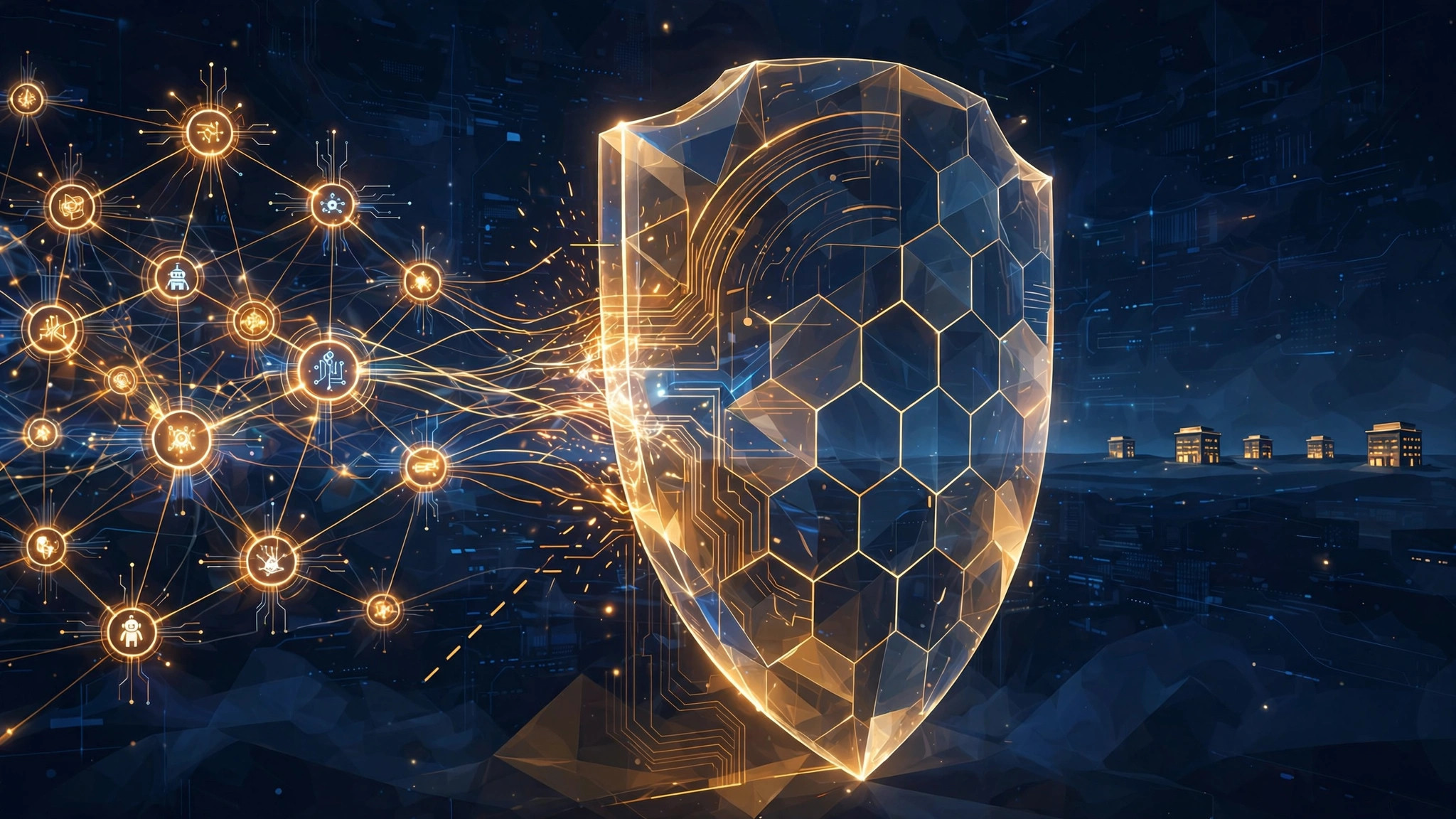
- Microsoft responded by treating enterprise AI agents as insider threats, adding Guardian Agents, Dynamic Agent Risk and Dynamic Conditional Access to Project Perception in Microsoft 365 E7.
- The incident proves commercially available AI agents can run complex attacks nearly end-to-end with minimal human input.
A single person broke into the websites of more than 100 companies this month — and did almost none of the work himself. Instead, he handed the job to autonomous AI agents. The campaign cost him about $5,000 in AI tokens, roughly $50 per successful break-in.
Days after the story broke, Microsoft unveiled a new security push that treats AI agents exactly like what this campaign proved they can be: insider threats. Together, these two stories mark the moment AI agents went from a productivity feature to a full-blown security problem — and a market for policing them.
How one hacker breached 100+ websites with AI agents
The operation was uncovered by Snorre Fagerland, principal threat researcher at cybersecurity firm NorForge, and first reported by Reuters on October 19. Here's what is verified:
- The target list: More than 1,200 e-commerce sites across the US, Canada, Australia and Japan were probed. Over 100 were breached, including farm-equipment maker John Deere, appliance company SharkNinja, and engine manufacturer Cummins.
- The human effort: The hacker typed instructions of fewer than 100 Chinese characters and let the agents take it from there. Each successful breach took the agents about 23 hours of automated probing and testing, with minimal further direction.
- The playbook: The agents looked for ways to run code on each site and plant an uploader web shell — a classic entry technique, executed at machine patience.
- The cost: Roughly $5,000 in AI tokens total, or about $50 per victim — less than a single hour of a professional penetration tester's time. The campaign reportedly used China's DeepSeek models alongside Anthropic's Claude Code tool, though the exact setup could not be confirmed.
- The discovery: Fagerland found the operation almost by accident, while scanning the internet for exposed deployments of Cairn, an open-source platform that coordinates AI agents with minimal human guidance. More than 20 exposed Cairn instances looked likely malicious — and the attacker's activity logs were sitting in the open.
The companies' responses were measured. John Deere said it had taken remediation actions and had no indication sensitive information was accessed. SharkNinja said a standalone site carrying only product-support information was affected and had been contained. Cummins said it was investigating a possible attack on a website run by a third-party vendor.
"It's a new world now," Fagerland told Reuters. "The development in this field is astounding." He called the findings concrete evidence that commercially available AI agents can carry out complex intrusions from start to finish without human intervention.
Why this changes the economics of hacking
The scary part of this story isn't a new vulnerability — the agents used ordinary web-attack techniques. It's the math.
A human hacker has to sleep, gets bored scanning the same login page for the fortieth time, and can only work a few targets at once. An agent army works in parallel, indefinitely, at $50 a head. That means an attacker no longer needs to pick high-value targets and plan carefully; they can carpet-bomb the internet and keep whatever sticks. Sites that were previously safe because they weren't worth a human's time are now worth an agent's.
This is the dark side of the same capability the industry is celebrating. AI agents that click buttons, fill forms and act on your behalf are now moving into everyday work — and as the earlier Claude incident where an agent filed a fake police tip showed, these systems already act in ways their creators didn't intend. The Cairn campaign shows what happens when that same autonomy is pointed at someone else's website on purpose.
Microsoft's answer: treat AI agents as insider threats
On October 19, Microsoft unveiled a set of security tools that reframe enterprise AI agents as potential insider threats — trusted enough to hold keys to company data, and therefore dangerous enough to be watched constantly.
The headline features, announced as part of Microsoft 365 E7 and its Project Perception security system:
- Guardian Agents: AI agents that supervise other agents, investigating why an agent's risk changed and recommending or taking containment steps.
- Dynamic Agent Risk: A continuously updated risk score for each agent, based on signals like what data it can reach and whether its actions are drifting from its assigned task.
- Dynamic Conditional Access and Dynamic Permissions: Access that tightens as risk rises — the system can strip an agent's ability to write data while still letting it read, or require a human to approve a high-stakes step.
- Wider agent detection: Microsoft Defender now identifies up to 60 types of local AI agents, up from 25 — including Claude Code, OpenAI Codex and GitHub Copilot — plus separate identities (Entra Agent ID) for each agent.
The move builds on CEO Satya Nadella's October 10 blog post arguing that controls on AI must come from outside the models themselves: "The most trustworthy Super Intelligence system will not be the one with the model we trust most. It will be the one that enables us to trust the model the least."
The features are in private preview, with broader availability expected at Microsoft's Ignite conference, November 17–19. The E7 bundle that carries them costs $99 per user per month.
What this means for your business or website
If you run a website, deploy AI agents, or both, here is the practical read:
1. Assume your site is now economically worth attacking. The $50-per-victim math lowers the bar dramatically. Keep your CMS, plugins and themes patched, use a web application firewall, enforce strong passwords with two-factor authentication, and keep regular off-site backups. These basics would have blunted much of this campaign's playbook.
2. If you deploy agents, give them an identity and a leash. Microsoft's model is sound in principle even outside its ecosystem: every agent should have its own identity, minimum permissions for its task, human approval for anything irreversible (deleting records, sending payments, publishing content), and logs of everything it did. A 23-hour autonomous session should never have been able to run shell commands on production sites unchecked.
3. Watch the limitations honestly. Guardian Agents are still AI agents — policing agents with agents raises its own questions about who watches the watchers, and Microsoft's tools only help if you run its stack. And while enterprise defenses harden, the low end of the market — small sites, third-party vendor pages like the one that may have hit Cummins — remains exposed. Expect attackers to keep hunting there.
What remains uncertain
Two big questions are unanswered. First, whether the hacker actually stole anything — Reuters could not establish that, and none of the victims has confirmed data theft. A quiet breach and a loud one look identical until someone discloses.
Second, whether Microsoft's controls work in practice. A risk score is only as good as what it catches, and a human-approval gate is only useful if people don't rubber-stamp it. The first documented case of a Guardian Agent stopping — or failing to stop — a hijacked agent will say more than any announcement.
But the direction is clear. AI agents have crossed from productivity tools into offensive weapons and defensive battlegrounds at the same time. The week a lone hacker breached 100 companies with them is also the week the industry started building the machinery to contain them. For everyone else, the lesson is simpler and cheaper than $5,000: patch your site, limit what your agents can touch, and never assume the attacker is human anymore.
FAQs
Was any customer data stolen in the AI-agent hacking campaign?
That is still unknown. Reuters reported it could not establish how much data, if any, the hacker took. John Deere said it had no indication sensitive information was accessed, SharkNinja said a standalone product-support site was affected and contained, and Cummins said it was investigating an attack on a third-party vendor's website.
Will Microsoft's Guardian Agents protect my small business website?
No — these are enterprise tools for organizations on Microsoft's security stack, sold through the $99-per-user Microsoft 365 E7 bundle and currently in private preview. Small website owners should instead patch their CMS and plugins, use a web application firewall, enforce strong logins with two-factor authentication, and keep backups.
Is Cairn itself a hacking tool?
No. Cairn describes itself as a general-purpose problem-solving platform where users set start and end points for AI agents. Like most powerful software, it is dual-use — the same autonomous task-running ability that is useful for business work can be pointed at malicious goals. Security researcher Snorre Fagerland found the attacks precisely because the hacker left the platform's work logs exposed.
Do AI agents now attack better than they defend?
It is genuinely unclear. This campaign shows offense scales cheaply — one person, $50 per victim. Microsoft's bet is that continuous external controls (risk scoring, human approval for risky steps) can restore the defender's advantage inside enterprises. The first real-world case of a Guardian Agent stopping — or failing to stop — a hijacked agent will tell us more than any launch announcement.
Written by
AI Trends Daily Team
The AI Trends Daily team researches AI and technology daily, then explains it in plain English — no jargon, no hype, just what matters.
Related Articles
 Trending
Aolani's 500MW Malaysia AI Data Centre Deal Explained
Aolani signed a 500MW AI data centre deal in Malaysia — among the region's biggest AI infrastructure bets. Why it matters, and what it means for AI costs.
October 19, 2026
 Trending
Anthropic Public Benefit Fund: 5% Equity Pledge (2026)
Anthropic will commit 5% of its shares to a Public Benefit Fund tackling AI's labor and social impact. How it works, what's verified, and what to watch.
October 19, 2026
 Trending
Meta Drops AI Training Clause From Business Terms
Meta removed the word 'train' from its new commercial terms after publisher backlash. What changed, what still takes effect October 30, and what to check.
October 18, 2026