Apple iPhone Duo (2026): Price, Specs & Release Date
Apple's first foldable iPhone Duo: $1,999, 7.6-inch folding screen, A20 Pro. Full specs, price, release date, pre-order delays and trade-offs explained.
Key Takeaways
- The iPhone Duo is Apple's first foldable iPhone: a 7.6-inch folding inner display plus a 5.4-inch outer display, powered by the A20 Pro chip.
- It starts at $1,999 for 256GB — a $700 premium over the iPhone 18 Pro Max and $100 more than Samsung's Galaxy Z Fold 8.
- Pre-orders opened October 16, 2026; the phone ships October 23, 2026 in 70+ markets, with demand already pushing some shipping times into 2027.
- Key trade-offs: Touch ID replaces Face ID, there is no telephoto camera, and at 254g it is one of Apple's heaviest phones.
- The Duo ships with iOS 27.1, bringing fold-specific multitasking like Split View and Apple Pencil (USB-C) support later in 2026.
- Best for early adopters and productivity users who want a phone plus a mini-tablet; everyone else may want to wait for the second generation.
Apple iPhone Duo (2026): Price, Specs, Release Date — Everything Explained
Apple has finally done it. After years of rumors — and seven generations of Samsung foldables shipping without a response — Apple has unveiled its first foldable iPhone: the iPhone Duo. Announced on September 9, 2026 alongside the iPhone 18 Pro line, it opens like a book from a compact 5.4-inch phone into a 7.6-inch mini-tablet, and it starts at $1,999.
That price, the long pre-order wait times, and a few surprising trade-offs are what everyone is talking about. Here is the complete, honest breakdown: the specs, the price, the release date, how it compares — and whether you should actually buy one.
iPhone Duo: The Basics
The iPhone Duo is Apple's answer to a question it ignored for nearly a decade: what should an iPhone look like when it folds? Apple's answer is a book-style foldable, similar in concept to Samsung's Galaxy Z Fold line but executed with Apple's typical obsession over materials and display quality.
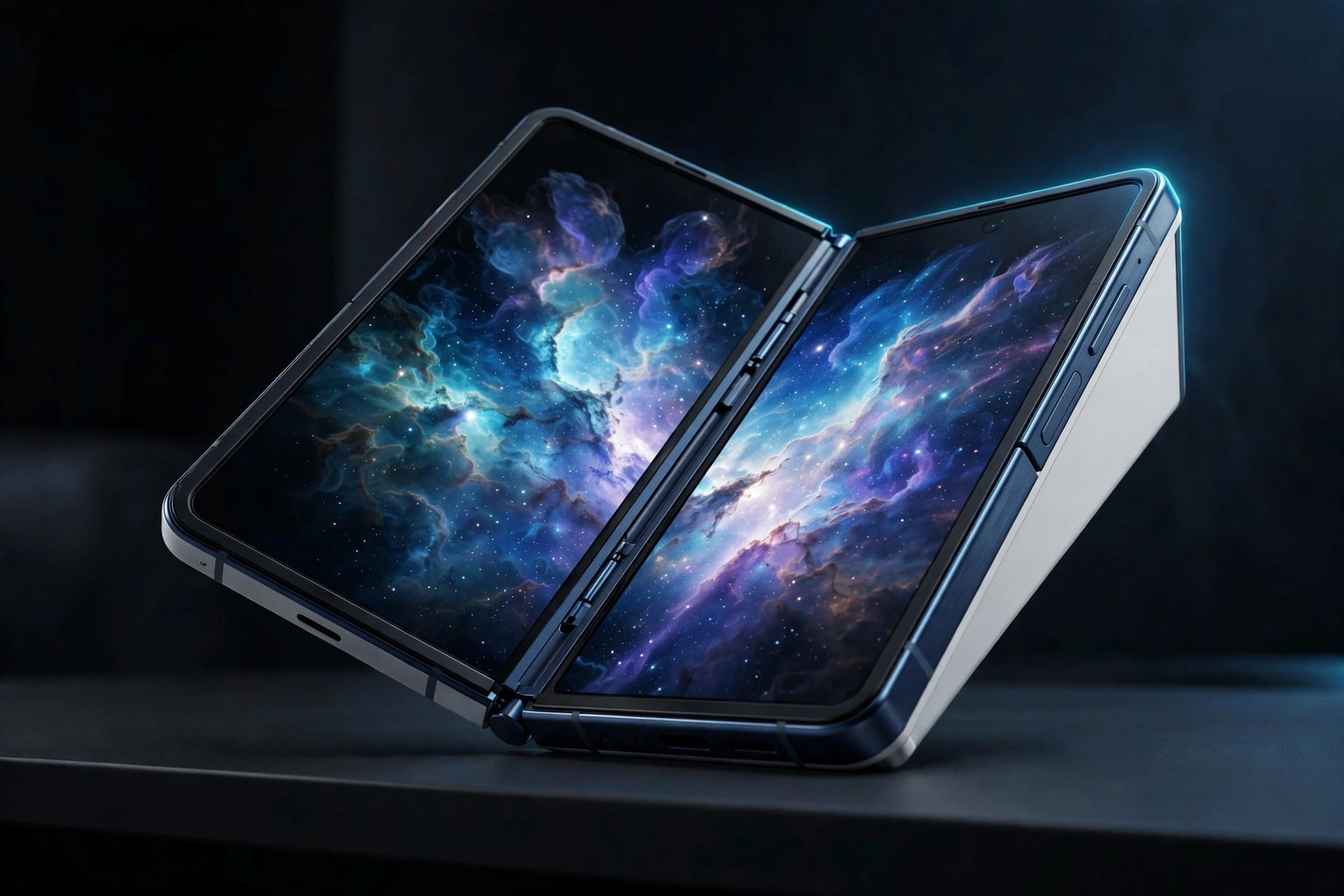
Closed, you use the 5.4-inch Super Retina XDR outer display — roughly the size of a classic small iPhone — for calls, texts, and quick tasks. Open it, and you get a 7.6-inch Super Retina XDR inner display, which Apple describes as its largest-ever iPhone screen with 50 percent more screen area than the iPhone 18 Pro Max. The inner panel uses a custom nano-texture finish designed to minimize glare and — critically — reduce the visibility of the crease that has plagued foldables for years.
Full Specifications
Here is what Apple has confirmed:
| Specification | iPhone Duo | |---|---| | Inner display | 7.6-inch folding Super Retina XDR OLED, 120Hz ProMotion, Always-On, nano-texture finish, 3,000-nit peak brightness | | Outer display | 5.4-inch Super Retina XDR OLED, 120Hz ProMotion, Always-On | | Chip | A20 Pro with vapor-chamber cooling | | Modem | Apple C2 cellular modem | | Rear cameras | 48MP Fusion Main + 48MP Fusion Ultra Wide (up to 2x optical-quality zoom) | | Front cameras | 12MP Center Stage (outer), under-display FaceTime camera (inner) | | Video | 4K 120fps | | Biometrics | Touch ID in side button (no Face ID) | | Battery | Dual batteries: up to 44 hours video (outer display), 31 hours (inner), 24 hours mixed use | | Charging | USB-C, MagSafe and Qi2 up to 25W | | Storage | 256GB, 512GB, 1TB, 2TB | | RAM | 12GB | | Build | Grade 5 titanium frame and hinge cover, IP68 dust and water resistance | | Dimensions | 5.2mm open, 11.3mm closed; 254g | | Colors | Star White, Night Sky | | SIM | Dual eSIM only | | Connectivity | Wi-Fi 7, Bluetooth 6, Thread | | Software | iOS 27.1 |
Apple is also selling a Duo Folio with a kickstand and a two-part case that protects each half of the device.
Design: Thin Open, Thick Closed
The numbers tell an interesting story. At 5.2mm open, the Duo is astonishingly thin — thinner than almost any phone ever made. But closed, it stacks to 11.3mm and weighs 254 grams, making it one of the heaviest and thickest phones Apple has ever shipped in everyday use. That is the fundamental physics of a foldable: two halves, two batteries, a precision hinge.
The Grade 5 titanium frame matches Apple's premium materials language, and IP68 dust and water resistance is a genuine achievement — foldables have historically struggled with sealing, and IP68 puts the Duo on par with conventional flagships.
Cameras: Great, With One Glaring Omission
The camera system is strong but deliberately compromised. You get two excellent sensors — a 48MP Fusion Main and a 48MP Fusion Ultra Wide — plus a 12MP Center Stage camera on the outer display and a hidden under-display FaceTime camera inside. Video goes up to 4K at 120fps.
What you do not get is a telephoto lens. The iPhone 18 Pro Max keeps its telephoto zoom; the Duo maxes out at 2x optical-quality zoom. Apple clearly ran out of physical space (and budget) inside the folding chassis. If zoom photography matters to you, that is a real reason to pause.
Apple added fold-specific camera tricks: Duo Preview (frame your shot on the outer display while using the main cameras), Smart Take, Kid Cue, and Duo FaceTime, which uses the second screen during video calls.
Performance: A20 Pro and Vapor-Chamber Cooling
The A20 Pro chip — the same silicon family powering the iPhone 18 Pro — drives both displays simultaneously through a new display engine. Apple paired it with a vapor-chamber cooling system, a first for iPhone, to keep thermals under control inside the folding body. With 12GB of RAM on every model, the Duo is built for heavy multitasking, which makes sense: the whole point of a folding phone is doing two or three things at once.
iOS 27.1: Software Made for Folding
Hardware is only half the story. The Duo ships with iOS 27.1, which includes fold-specific interface features: Split View multitasking (pin a video to the top half while you work below), hands-free FaceTime, a reimagined StandBy mode that works without charging, and layouts that transition seamlessly between the two screens. The phone works in any orientation and even partially folded.
Apple Pencil (USB-C) support arrives later in 2026, which quietly positions the opened Duo as a sketching and note-taking device — a direct shot at the tablet use case.
Price, Pre-Orders and Release Date
- Price: $1,999 for 256GB; $2,199 for 512GB; 1TB and 2TB tiers also available.
- Pre-orders: opened Friday, October 16, 2026, at 5 a.m. Pacific / 8 a.m. Eastern / 1 p.m. BST.
- Release date: Friday, October 23, 2026, in more than 70 markets; 28 additional countries follow on October 30.
For context: the Duo is a $700 premium over the iPhone 18 Pro Max ($1,299) and $100 more than the Samsung Galaxy Z Fold 8 ($1,899). That pricing tells you exactly who Apple is targeting first: not the mainstream, but early adopters and professionals who will pay a premium for a phone that becomes a tablet.
The catch: demand is outstripping supply
Pre-order demand has been enormous. Reporting from launch week shows strong pre-order sales, but also very long wait times for anyone who did not order immediately — and shipping estimates for some configurations are already slipping into 2027. If you want a Duo for the holidays, order sooner rather than later, and expect the configuration you want (color, storage) to matter for delivery timing.
iPhone Duo vs. The Competition
Vs. iPhone 18 Pro Max ($1,299): The Pro Max is $700 cheaper, has a better camera system (including telephoto), Face ID, and a proven form factor. The Duo gives you the folding 7.6-inch display and the wow factor. Unless you specifically want a foldable, the Pro Max is the rational buy.
Vs. Samsung Galaxy Z Fold 8 ($1,899): Samsung has seven generations of refinement, typically better multitasking software maturity, and a $100 price advantage. The Duo counters with Apple's chip efficiency, the nano-texture display, and deep iOS integration. This one comes down to ecosystem loyalty more than specs.
Vs. your current phone: Honestly? Most people should wait. First-generation Apple hardware in a brand-new category, at $1,999, with shipping delays — the second-generation Duo will almost certainly be thinner, cheaper, and better.
The Honest Caveats
No $1,999 first-generation device deserves a free pass. Here is what Apple would rather you not dwell on:
- No Face ID. Touch ID in the side button works fine, but it is a step back from the seamlessness of Face ID — a compromise forced by the fold.
- No telephoto camera. The iPhone 18 Pro Max takes better zoom photos for $700 less.
- 254g and 11.3mm closed. This is a chunky, heavy device in daily pocket use.
- First-generation hinge. Apple has never shipped a folding mechanism at scale. Long-term durability — the crease, the hinge, the inner display coating — is unproven.
- The price. $1,999 is MacBook territory. And good luck getting one quickly: wait times are already stretching into 2027 for some models.
Who Should Buy the iPhone Duo?
- Early adopters who want Apple's first foldable on day one and accept the trade-offs.
- Productivity users who will genuinely use Split View, the big canvas, and Apple Pencil support for work.
- Deep iOS loyalists who considered switching to Samsung for a foldable and no longer have to.
Everyone else — especially anyone who upgrades for the camera or for value — should get the iPhone 18 Pro Max, or wait for Duo generation two.
The Bottom Line
The iPhone Duo is the most significant iPhone redesign in a decade: a genuinely impressive folding phone with a best-in-class display, the A20 Pro, and thoughtful fold-aware software. It is also expensive, heavy, missing a telephoto lens, and hard to get. Apple has entered the foldable era with a statement device, not a mass-market one.
If you order today, expect a wait — possibly into 2027. If you can live with that, the Duo is a remarkable glimpse of where the iPhone goes next.
Sources & Further Reading
- iPhone Duo pre-order sales — CBS News
- iPhone Duo wait times for pre-orders — GSMArena
- Apple iPhone Duo shipping times slipping to 2027 — Business Insider
- iPhone Duo guide: preorders, price, release date and specs — Macworld
- Apple unveils foldable iPhone Duo — 9to5Mac
FAQs
What is the Apple iPhone Duo?
The iPhone Duo is Apple's first foldable smartphone, announced on September 9, 2026. It opens like a book: a compact 5.4-inch phone on the outside and a 7.6-inch tablet-sized Super Retina XDR display on the inside.
How much does the iPhone Duo cost?
The iPhone Duo starts at $1,999 for the 256GB model. The 512GB model is priced at $2,199. Four storage tiers are available: 256GB, 512GB, 1TB and 2TB.
When is the iPhone Duo release date?
Pre-orders opened on Friday, October 16, 2026, and the iPhone Duo officially ships on Friday, October 23, 2026 in more than 70 markets, with 28 more countries following on October 30. High demand has pushed some shipping estimates into 2027.
Does the iPhone Duo have Face ID?
No. Apple replaced Face ID with Touch ID integrated into the side button on the iPhone Duo, a design choice driven by the foldable form factor. You can also unlock it with an Apple Watch.
Is the iPhone Duo better than the Samsung Galaxy Z Fold 8?
It depends on your ecosystem. The Duo costs $100 more than the Z Fold 8 ($1,999 vs $1,899) and offers a crease-minimizing nano-texture display and A20 Pro chip, but Samsung has seven generations of folding-phone refinement. iPhone loyalists get deep iOS integration; Android users will likely stick with Samsung.
Should I buy the iPhone Duo or wait?
If you want Apple's first foldable and accept first-generation trade-offs (no telephoto lens, 254g weight, $1,999 price, long shipping waits), it is a genuinely impressive device. If you want the best camera system or the best value, the iPhone 18 Pro Max — $700 cheaper — is the smarter buy right now.
Written by
AI Trends Daily Team
The AI Trends Daily team researches AI and technology daily, then explains it in plain English — no jargon, no hype, just what matters.