ChatGPT Image Ads Explained: What US Users Will See (2026)
OpenAI is testing visual ads inside ChatGPT's image generator for US users in October 2026. Here's what they look like, who sees them, and how to stay ad-free.
Key Takeaways
- OpenAI is testing visual ads inside ChatGPT's image generator in the US later in October 2026 — the first image-based ad format in ChatGPT.
- The ads appear while you wait for your image to generate; OpenAI says they are clearly labeled, separate from your picture, and do not change ChatGPT's answers.
- Only Free and Go ($8/month) users see ads — Plus, Pro, Business and Enterprise subscribers stay ad-free, as do users believed to be under 18.
- Ads will not appear in health, mental health, political, or emotionally sensitive conversations, with automated review plus human oversight.
- ChatGPT's ad business has already reached a $1 billion annualized revenue run rate, with ads live in 40+ countries since February 2026.
The next time you ask ChatGPT to paint you a picture, you might get a sales pitch with it.
On October 5, 2026, OpenAI announced it will test visual ads inside ChatGPT's image generator, starting later this month in the United States. It's the biggest ad experiment the company has tried inside its flagship chatbot — and it turns the seconds you spend waiting for an image into inventory for advertisers.
Here's what the ads look like, who will see them, and what this tells us about where ChatGPT's business is heading.
What the ads actually look like
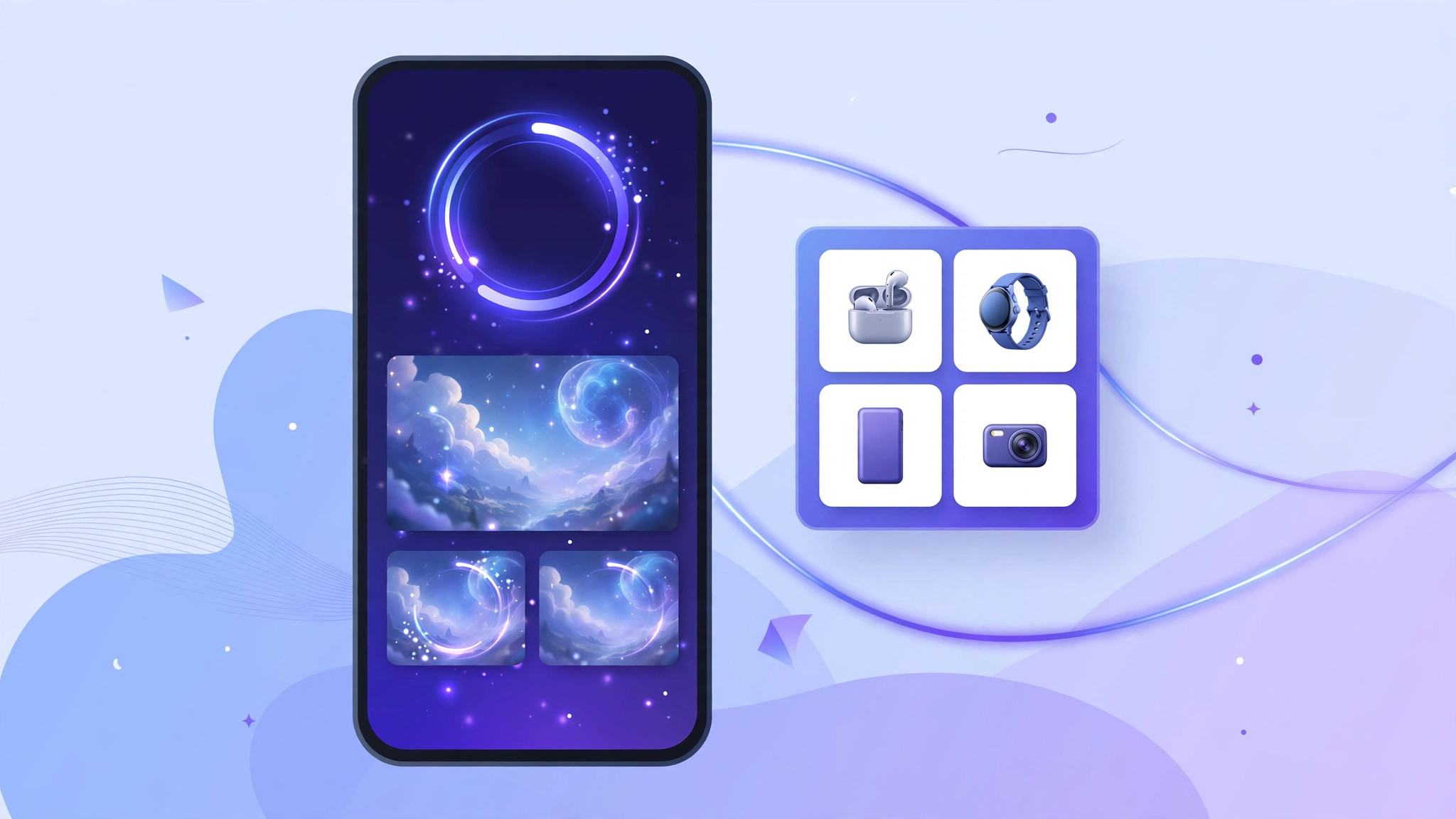
Until now, ads in ChatGPT have been text-heavy and easy to scroll past: a single sponsored unit with a headline, description, image, and link tucked at the bottom of an answer, billed per click. The new format is visual by design. OpenAI describes it as a way to show product inspiration, product usage, or the experiences a product or service makes possible — essentially pictures of things in use, not static banners.
Example screenshots shared by OpenAI show a mobile phone displaying a grocery brand's product images alongside a "Learn more" button while an image request is being processed. The ad sits in the generation flow, so it's visible during the dead time between your prompt and your picture.
Two promises come with the format:
- The ads are clearly labeled and kept separate from the image ChatGPT is creating for you.
- Advertising does not influence ChatGPT's answers. Advertisers cannot shape, rank, or alter what the chatbot says — your drawing stays yours, and the sales pitch sits beside it.
Why image generation is the first slot
Picking the image-generation wait is no accident. It's one of the few moments in ChatGPT where the user is idle, staring at the screen, with nothing to do but wait — premium attention for an advertiser. It also signals where the monetization pressure is heaviest: image creation has grown into one of ChatGPT's most developed features, and OpenAI is now building the commercial plumbing around its most popular workflows.
The partner list behind the test says more about the ambition than the format itself. OpenAI has lined up:
- Hightouch, Tealium, and LiveRamp for conversion data
- AppsFlyer, Adjust, Branch, Singular, and Kochava for attribution
- Haus, Measured, and WorkMagic for geo-based incrementality experiments
- DoubleVerify and Integral Ad Science for brand-suitability verification
That's the machinery of a serious ad business: advertisers will be able to measure whether a ChatGPT placement actually drove sales, which was one of the main complaints about ChatGPT Ads when the program launched in February.
Who sees the ads (and who doesn't)
This matters most if you're on a free or cheap plan. ChatGPT's ads appear only for users on the Free plan and Go, the $8-a-month budget tier. Subscribers on Plus, Pro, Business, and Enterprise plans see no ads at all.
That tiering also applies to the broader ad program, which has been running since February 2026 and has expanded to more than 40 countries. Back in August, OpenAI added product carousels that pull items directly from retailer product feeds — essentially a Google-Shopping-style unit inside the chat. According to OpenAI, the ad business has already reached a $1 billion annualized revenue run rate across its 1.2 billion weekly users.
The company also repeats several protections:
- Users believed to be under 18 won't see ads.
- Ads stay away from health, mental health, and politics. OpenAI says placement guardrails assess whether a conversation is appropriate for advertising and keep ads out of emotionally vulnerable or sensitive contexts.
- Policy violations are caught through automated review, human oversight, and ongoing monitoring. Advertisers can also use a "Negative Phrases" option to exclude placements that clash with their brand policies.
What advertisers get — and the numbers to take with salt
For businesses, OpenAI points to early results from its ad program. The headline numbers: WeightWatchers reported a 15.3% lower cost per acquisition than its blended paid search, and Portland Leather said 93% of visitors arriving from ChatGPT Ads were new to the brand.
Worth a caveat: these are advertiser and partner claims from a handful of hand-picked early cases, not independently audited benchmarks. Interesting as direction, useless as a guarantee. Any business can sign up at OpenAI's advertiser portal and test for itself.
The test is also deliberately narrow: US only, an initial group of advertisers, no announced date for wider rollout. OpenAI has a habit of testing commercial features cautiously — the February ad launch followed a similar script — so it's reasonable to expect the company to watch user reaction before going global. If the format lands badly, it may never leave the US; if it prints money, expect it in more surfaces.
What this means for you
If you're on the free tier, the change is mostly cosmetic: a labeled product carousel next to your image while it renders. If the label is honest and the ads truly don't touch the image or the answers, most users will barely notice.
But the trajectory is worth watching. Every new ad surface makes the free tier a little more commercial, and every new measurement partner makes the ad product a little more valuable to OpenAI than the subscription one. So far the wall between church and state — ads labeled, answers untouched — has held. Whether it survives the next few years of revenue targets is the real test.
For now, the equation is simple: ads on Free and Go, none on the paid plans. If the product carousels annoy you while your pictures render, you know where the upgrade button is.
FAQs
Will ChatGPT ads change the images I generate?
No. OpenAI says the visual ads are clearly labeled and remain separate from the image you asked for. The company also states that advertising does not influence ChatGPT's answers, and advertisers cannot shape, rank, or alter the chatbot's responses.
Who will see ads in ChatGPT's image generator?
Only users on the Free plan and the cheaper Go ($8/month) tier see ChatGPT ads, and the image-generation test starts with US users. Users on Plus, Pro, Business, and Enterprise plans are ad-free, as are users OpenAI believes are under 18.
When do ChatGPT image ads launch?
OpenAI announced the format on October 5, 2026 and said testing begins later in October in the United States with an initial group of advertisers. It has not announced an exact date or when — or whether — the format will roll out more widely.
How do I avoid ads in ChatGPT?
Upgrade to a Plus, Pro, Business, or Enterprise plan — none of them show ads. There is no settings toggle on the Free or Go tiers to switch ads off individually.
Do advertisers see my ChatGPT conversations?
According to OpenAI, no. Conversations stay private from advertisers. Brand-safety verification by DoubleVerify and Integral Ad Science runs in controlled testing environments without giving those vendors access to real user conversations.
Are the ad performance numbers OpenAI quoted trustworthy?
Treat them as marketing claims, not audited benchmarks. Examples like WeightWatchers' 15.3% lower cost per acquisition and Portland Leather's 93% new visitors come from a small set of hand-picked advertisers, so don't assume your campaigns would match.
Written by
AI Trends Daily Team
The AI Trends Daily team researches AI and technology daily, then explains it in plain English — no jargon, no hype, just what matters.
Related Articles
 Trending
Meta Drops AI Training Clause From Business Terms
Meta removed the word 'train' from its new commercial terms after publisher backlash. What changed, what still takes effect October 30, and what to check.
October 18, 2026
 Trending
Flying Tesla Roadster Explained: Demo, Price, Release Date & Can It Fly? (2026)
Tesla's new Roadster drove upside down, flew and flipped using SpaceX thrusters in its Oct 15 debut. Demo details, 3 versions, price, 2028 release date and whether it can really fly.
October 17, 2026
 Trending
Google AI Mode Update 2026: Links Get More Visibility
Google's October 2026 update makes inline links, news carousels, and creator profiles more visible in AI answers. Here's what changed and what it means for publishers.
October 16, 2026