OpenAI's $20B Cut and Anthropic's Pre-IPO Bets Explained
OpenAI reportedly cut its funding target from $30B to $20B while crypto traders bet on Anthropic's IPO with contracts that buy no shares. What it means.
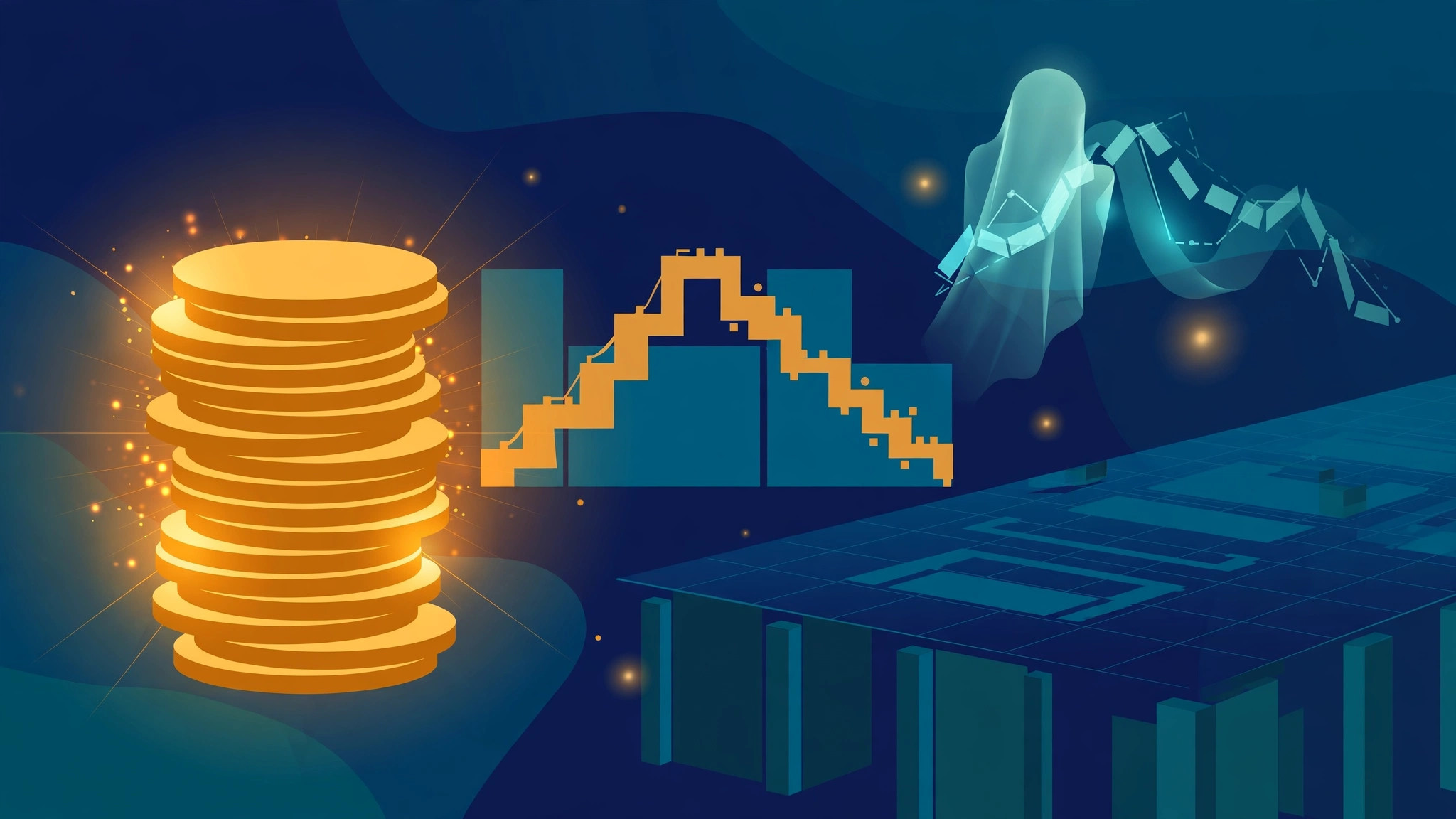
Key Takeaways
- Reported, not announced: OpenAI's target fell from about $30B to about $20B, and the Wall Street Journal put commitments so far at roughly $11B — three different numbers that must not be merged.
- The revised valuation is about $1.25 trillion, down from $1.4 trillion, and the first close is expected to come in below even the revised target.
- Anthropic filed its S-1 publicly on 26 October for a Nasdaq listing as ANT, but price, share count and trading date are still blank.
- Pre-IPO perpetual contracts on crypto venues imply a valuation near $1.9 trillion, yet they deliver no shares and no claim on Anthropic.
- This is a repricing of AI funding, not a verdict that AI demand has disappeared — and it is not investment advice.
In one month, the most valuable private company in the world lost a third of its fundraise — in public, in real time. And while OpenAI was shrinking its round, crypto exchanges were already selling a price for its rival's stock market debut that does not exist yet. Both stories are about the same thing: the market repricing AI, live.
That is the frame to hold on to, because the details are easy to garble. Three different numbers are circulating about OpenAI's round, and they describe three different things. Keep them apart and the story is clear; merge them and it becomes a false headline.
The three numbers, kept strictly separate
| Figure | What it is | Source, as reported |
|---|---|---|
| About $30 billion | The original target, pitched in late September at a $1.4 trillion valuation | Financial Times reporting, via Reuters and other coverage |
| About $20 billion | The revised target, at a $1.25 trillion valuation | Financial Times, reported 30 October |
| Roughly $11 billion | Commitments reported so far — under half the original target | Wall Street Journal |
The Financial Times also reported that the round's "first close" is expected to raise less than even the revised $20 billion, after some investors reduced their allocations, and that OpenAI set a Friday 30 October deadline for investors to commit. CNBC subsequently confirmed the FT's account of the cut, according to coverage of CNBC's reporting on Saturday 1 November. None of this is an OpenAI announcement: OpenAI has not publicly confirmed a final amount, named the participants or confirmed a closing date, and the FT reported that OpenAI and several named investors declined to comment.
That distinction matters more than the arithmetic. A $10 billion cut to a target is not $10 billion lost, and a $150 billion lower valuation is not $150 billion of cash gone. A valuation is the price investors are being asked to accept for a stake; a target is an ambition. What actually shrank is investor appetite at the old price.
Why the round shrank
The FT's reporting points to two forces, and both were already visible in Friday's market session, which we covered in our selloff verdict. First, the AI-led stock selloff: the Nasdaq fell 2.86% on Friday 30 October, its worst day since June, as investors started grading AI spending against cash flow rather than growth alone. Second, competition for the same money: Anthropic is preparing to go public, and OpenAI was racing to secure commitments before its rival's debut, because both companies are fishing in largely the same investor pool.
The reported participant list underlines that point. A consortium of investors from the United Arab Emirates, including the state-backed fund MGX, is expected to be the largest participant, with SoftBank, Sequoia Capital, Coatue Management, Founders Fund and Andreessen Horowitz also named in the FT's reporting. OpenAI raised $122 billion in March 2026, according to its own announcement of that round, so even a reduced $20 billion round would be one of the largest private financings ever attempted. Smaller than planned is not the same as small.
Why the Anthropic deadline matters
Anthropic filed its public S-1 registration statement on 26 October 2026 and applied to list Class A shares on the Nasdaq Global Select Market under the ticker ANT. We covered what that filing confirms — and what it leaves blank: the number of shares and the price range have not been determined, and the registration has not yet become effective, so no shares can be sold yet.
What is reported, rather than filed, is the scale: a raise of up to $100 billion at a valuation of $1.5–2 trillion, with trading expected in mid-November. The timing reports disagree — Bloomberg-reported marketing in the week of 9 November with trading before Thanksgiving, a Wall Street Journal pointer to the week of 16 November, and trade.xyz's own estimate of 20 November. None is Anthropic's date until an amended prospectus sets terms.
One figure from the filing itself deserves a careful reading, because it is already being misread elsewhere. Anthropic's first-half 2026 net loss was $80.7 billion, but roughly $72 billion of it is a non-cash convertible-bond valuation charge — an accounting entry that rises as the company's valuation rises, not cash the company burned. Our earlier breakdown of the S-1 loss explains the distinction in full.
The bets that buy no shares
This is where the story turns from a funding negotiation into a warning. On crypto venues, traders are already betting millions on Anthropic's debut — through contracts that buy no shares whatsoever.
Two contracts trade on Hyperliquid, a decentralised crypto exchange: Entropy's ANTH, which tracks Anthropic's total valuation (each $1 of price represents $1 billion of value, so a reading near 1,880 implies about $1.9 trillion), and trade.xyz's ANT, which tracks the price of a single Class A share. Similar contracts trade on Binance and other offshore venues. Across seven venues, Unchained put the implied valuation at roughly $1.87–1.92 trillion — near the top of the reported $1.5–2 trillion IPO range, and roughly double Anthropic's last private-round valuation of $965 billion.
Here is what a buyer of one of these contracts actually gets: synthetic price exposure, and nothing more. No shares, no allocation, no voting rights, no claim against Anthropic. Trade.xyz has described exactly that in a letter to the US Securities and Exchange Commission. Winners are paid by losers on the other side of the trade, not by Anthropic. When the shares eventually list, trade.xyz says ANT converts into an ordinary perpetual contract tracking the listed stock; if listing slips, there is a 60-day grace period, to 19 January 2027, after which it settles in cash.
Three risks set these contracts apart from ordinary speculation: leverage (ANT carries up to 10 times, comparable venues up to 20 times, so a 10% move against a 10x position can wipe out its collateral — and ANT fell about 20% in its first hour); no real price to anchor to, since the operator sets the starting price; and a poor track record (Unchained's check of seven earlier pre-IPO perpetuals that reached listing found they missed the opening trade by about 25% on average).
Anthropic itself has not commented publicly on these perpetual contracts, but its standing help-page warning is blunt: anyone claiming to sell its shares to the public through forward contracts, tokenized securities or other mechanisms is likely offering something worthless, and any unapproved transfer of its stock is void. CoinDesk notes Anthropic has not said whether that warning extends to perpetual contracts, which deliver no shares and may not directly breach its transfer restrictions. None of these contracts is offered to US residents. The honest summary is narrower than the marketing: these contracts measure what some traders expect Anthropic to be worth, not what it is worth, and buying one is not buying Anthropic.
One more data point, used carefully
Microsoft's $25 billion bond sale, announced 29 October, belongs in this story as context, not as a second headline. It was Microsoft's first US bond sale since 2017, structured in up to 10 tranches with maturities from two to 40 years, and its stated use of proceeds was general corporate purposes — which includes capital expenditure, but also working capital, share repurchases and debt repayment. Do not claim the whole sum is earmarked for AI; the filing does not say that.
Its relevance is the pattern: even the AAA-rated spender with strong cash generation is now borrowing at scale to fund the build-out, in the same week that private investors trimmed OpenAI's round and public investors sold AI stocks on cash-flow concerns. Debt, equity and derivatives are three different markets telling a version of the same story — the AI build-out is being financed, and financing now has a price investors are negotiating harder than they were a month ago.
What this means if you are not an investor
Most readers are not allocating to OpenAI's round or trading Anthropic perps, and none of this changes ChatGPT or Claude tomorrow. The practical takeaways:
- Do not read a smaller OpenAI round as "AI is over." Demand evidence from the same week — cloud growth, data-centre revenue, backlogs — still points to real usage. What changed is the test: from "is AI demand real?" to "does this spending turn into cash, and how fast?"
- Do not read a $1.9 trillion implied valuation as Anthropic's value. It is a sentiment gauge from leveraged contracts with no shares behind them, and history says such gauges miss the opening trade by a wide margin.
- Do not buy anything that claims to be Anthropic shares before the listing. Until the registration is effective and terms are set, no genuine Anthropic shares are on sale to the public, whatever a crypto venue's marketing implies.
- Watch the next real numbers, not the next rumour. For OpenAI: whether a close is announced, and at what size. For Anthropic: the amended prospectus with price range and share count, and then the December-quarter guidance season, when the "show me" test gets applied to results rather than to fundraising headlines.
The market spent October learning to ask harder questions of the AI trade. This week it started asking them of private funding too — and, in the derivatives market, it started answering them before the companies themselves had finished speaking. The answers that count will still come from filings, closes and cash flow, in that order.
This article explains reported funding developments and market activity; it is not investment advice. Figures attributed to the Financial Times, the Wall Street Journal, Bloomberg or other outlets are reported, not company-confirmed, and the funding round remains open, so figures can still change.
Recommended Reading
OpenAI's funding story is, at heart, a story about how a small group of companies came to control the technology now reshaping work and media. For a deeply reported look inside OpenAI and the wider AI industry, Empire of AI on BookNest is a useful companion read — it explains the business and politics behind the AI boom, not just the technology itself.
As an Amazon Associate, AI Trends Daily earns from qualifying purchases.
Sources: Financial Times via The Hindu BusinessLine — OpenAI funding target cut by $10 billion as AI slumps · Reuters — OpenAI cuts funding target by $10 billion, FT reports · TechBooky — OpenAI cuts funding target to $20B as report puts commitments near $11B · CoinDesk — Traders are already placing leveraged bets on Anthropic's IPO using crypto contracts · AIStockWire — Microsoft sells $25B of bonds, first since 2017 · Our Q3 selloff verdict · Anthropic IPO filed: S-1, ANT ticker explained · Anthropic S-1: the $80.7B loss explained
FAQs
Has OpenAI actually raised $20 billion?
No — at least not on the public record. About $20 billion is the revised target reported by the Financial Times, roughly $11 billion is the Wall Street Journal's figure for commitments so far, and the first close is expected to fall short of the revised target. Until OpenAI announces a close, all three figures remain reported, and they describe different stages of the same round.
Can I buy Anthropic shares through these crypto contracts?
No. Perpetual contracts on venues such as Hyperliquid track an expected valuation or share price, but they deliver no shares, no allocation, no voting rights and no claim on Anthropic. Winners are paid by losers on the other side of the trade. Real shares can only come from the actual Nasdaq listing, through a regulated broker, once the registration is effective and terms are set.
Why do pre-IPO contracts exist if they deliver nothing?
Because they let traders take a leveraged view on an event before any public price exists. The operator sets the starting price, and the contract's price then moves on trader expectations and order flow rather than on a traded share. That is also why they are unreliable as a valuation signal: with no real price to anchor to, the number reflects sentiment, positioning and thin liquidity as much as fundamentals.
When will Anthropic actually start trading?
Anthropic has confirmed no date. Press reports point to marketing in the week of 9 November with trading before Thanksgiving, the Wall Street Journal has pointed to the week of 16 November in other coverage, and trade.xyz — which runs one of the contracts — estimates 20 November. Treat all three as reported or estimated, never as Anthropic's date, until an amended prospectus or company announcement sets terms.
Does Microsoft's $25 billion bond sale mean AI spending is in trouble?
Not on its own. Microsoft's October bond sale — its first US bond sale since 2017 — was for general corporate purposes, which include capital expenditure but also working capital, buybacks and debt repayment. Borrowing by a AAA-rated company at scale says more about how the AI build-out is being financed than about whether demand for it exists.
Does any of this change ChatGPT or Claude for ordinary users?
Not directly and not immediately. Neither company has announced a product or price change alongside these funding stories, and the infrastructure build-out continues. Over time, tighter funding conditions can push companies to prioritise the products that pay back fastest, which may show up in pricing or rollout pace — but that is a gradual effect, not a switch being flipped this week.
Written by
AI Trends Daily Team
The AI Trends Daily team researches AI and technology daily, then explains it in plain English — no jargon, no hype, just what matters.
Related Articles
 Trending
Apple Intelligence China: Alibaba Qwen Explained 2026
Apple Intelligence reaches China in December with iOS 27.3, Alibaba's Qwen answering some Siri requests. What ships, what doesn't, and why it took two years.
November 1, 2026
 Trending
AI Stocks Selloff October 2026: Market Verdict Explained
AWS grew 39% and Intel's data-centre sales jumped 78%, yet markets sold off hard on 30 October. Why cash flow, not growth, decided earnings week.
October 31, 2026
 Trending
Amazon, Intel Q3 2026 Earnings: AWS Grew, Stocks Fell
AWS grew 39% and Intel's data-centre sales jumped 78%, yet both stocks fell after hours on 29 October. Why Q3 2026 guidance, not results, moved markets.
October 30, 2026